Skip To Content

All About HVAC Dampers

Optimizing airflow ensures comfort and efficiency in residential and commercial spaces. Alan Manufacturing Inc. offers a wide selection of standard and custom HVAC duct dampers. Crafted with the latest technology, our AC duct dampers are engineered to precisely regulate air distribution across different areas while enhancing energy efficiency. Discover the value these innovative products add to controlling airflow and significantly boosting your HVAC system’s overall efficiency and effectiveness.

What Are HVAC Dampers?

HVAC dampers regulate airflow within duct systems. They control how air moves through specific zones, rooms, or equipment sections according to cooling or heating settings.

In commercial, industrial, and residential systems, HVAC dampers play a direct role in airflow distribution, system efficiency, and occupant comfort. Without proper control, conditioned air may bypass critical areas or overload specific zones, leading to excess energy consumption, uneven temperatures, and premature HVAC system wear and tear.

Some HVAC duct dampers regulate airflow via manual adjustment, while motorized dampers can integrate seamlessly with complex building automation systems. Regardless of the specific type, all airflow dampers share a common purpose: to manage air volume and direction with high precision.

Integrating well-designed dampers into a duct system yields several operational advantages:
Balanced airflow

Conditioned air reaches the intended zones and gives users or occupants more control.

Energy efficiency

Controlled airflow reduces energy use in less-frequented areas.

System longevity

Stable airflow minimizes mechanical strain on HVAC fans, blowers, and other components.

Zoning capability

Certain dampers can be used in zoning applications, holding consistent temperatures in specific building zones.

Selecting the right HVAC damper type is a critical design decision that impacts long-term energy costs and system effectiveness, especially for large-scale or complex facilities.

HVAC Damper Types

Proper selection of an HVAC damper depends heavily on control requirements, system complexity, and specific installation conditions.

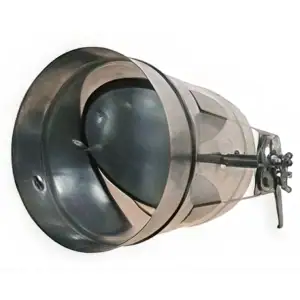
Manual Dampers
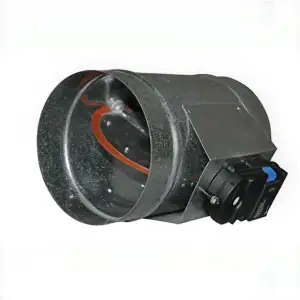
Motorized Dampers
Custom Dampers

Manual Dampers

Typically installed in areas without automated temperature control, manual dampers rely on the physical adjustment of a lever. The damper is typically located at air ducts or vents so that occupants or users can easily adjust the airflow into the room.

These HVAC duct dampers work exceptionally well in systems where airflow remains relatively constant. Their primary benefits include:

Simple control
No electrical wiring or automation programming is required
Lower upfront cost
They serve as an ideal solution for budget-sensitive retrofits and simple, small-scale HVAC systems.
Reliable operation and easy maintenance
Fewer moving parts and easy access reduce maintenance frequency and complexity.

Engineers and contractors commonly specify manual airflow dampers for:

Small commercial buildings
Residential HVAC systems
Fixed airflow applications
Systems with minimal or static zoning requirements

For project managers, manual dampers provide a highly practical, cost-effective, and durable solution in applications that require simple airflow control.

Motorized Dampers

Motorized dampers adjust airflow automatically based on input from control devices like zone panels, thermostats, occupancy sensors, or wireless remote controllers. An electrical actuator responds to control signals, changing the damper blade position to regulate airflow.

These zone control dampers support highly dynamic and precise airflow control across multiple distinct zones. Their operational benefits include:

Automated zoning
Airflow adjusts continuously based on temperature changes or room occupancy.
Improved system efficiency
Conditioned air is delivered strictly where it is needed, reducing energy waste.
Integration capability
Motorized dampers are compatible with smart controls and automation platforms.
Reduced manual intervention
They eliminate the need for ongoing physical adjustments by maintenance staff or occupants.

Facility managers frequently utilize motorized HVAC dampers in:

Multi-zone commercial buildings
Industrial facilities with variable air volume (VAV) systems
Smart HVAC systems with energy recovery ventilation (ERV)
Automatic air balancing systems
Exhaust and fresh air systems

For engineers designing modern, responsive HVAC systems, motorized dampers address strict performance requirements that manual solutions simply cannot meet.

Custom Dampers

Standard, off-the-shelf configurations do not always fit real-world HVAC systems. Unique duct layouts, specific airflow requirements, and proprietary control strategies often require tailored engineering solutions.

Our custom HVAC duct dampers address these exact challenges through application-specific designs. We support deep customization for multiple critical variables:

Exact dimensions and shapes for non-standard ductwork
Specific motor mounts and precise actuator compatibility
Material selection based on application (e.g., stainless steel for hospitals) or desired aesthetic
Custom materials like silicone gasketing for enhanced sealing
Seamless integration with wireless or wired control systems

We can manufacture custom products at low to high volumes. For OEMs and damper control companies, having consistent quality across large custom orders streamlines the overall supply chain.

FAQs: HVAC Dampers

What type of damper do I need?

When evaluating motorized vs. manual dampers, start by assessing the level of control your system requires.

Manual dampers suit systems with fixed, predictable airflow needs. They work best when zoning is minimal or adjustments occur infrequently.
Motorized dampers are the superior choice for systems requiring precise, real-time control. If the project includes multiple zones, automation requirements, or aggressive energy optimization goals, motorized zone control dampers are the best option.

During the specification phase, always consider:

Total HVAC system size and complexity
Required integration with thermostats or building controls
Project budget constraints
The physical installation environment

In many large-scale projects, engineers can utilize a combination of manual and motorized HVAC damper types to balance cost and performance.

How do I size a damper?

Proper damper sizing is essential to prevent excessive pressure drops and avoid damaging blower motors. Sizing is primarily determined by the duct’s dimensions and the chosen mounting method.

Round dampers are measured by diameter, while square and rectangular dampers are measured by height and width. These measurements are taken from the outer dimensions (O.D.) or the inner dimensions (I.D.). The measurement you should take depends on where the damper will be installed:

Size the damper using its outer dimensions (O.D.). Manufacturers typically undercut these measurements by ¼ inch by default so that the frame fits smoothly inside the ductwork. Use inner dimensions (I.D.). These are built to exact specifications so that the damper face completely covers the duct opening. Beyond physical dimensions, ensure your system’s air velocity (FPM) and static pressure (in. w.g.) do not exceed the damper’s maximum performance ratings. If standard sizes do not fit your unique layout, custom fabrication provides the necessary precision for a perfect fit.

Custom HVAC Dampers From Alan Manufacturing

Since 1992, Alan Manufacturing has been providing high-quality standard and custom HVAC damper products, including manual dampers, motorized dampers, duct mufflers, and spare parts and hardware. We actively support contractors, engineers, and OEMs across the residential, commercial, and industrial HVAC sectors.

We focus heavily on manufacturing flexibility and rapid lead times. Most orders ship within 7–10 business days, and we continuously optimize our production floors to reduce that window further. For projects requiring unique configurations, our engineering team adapts designs to match your exact specifications.

OEMs and contractors choose to partner with us to leverage our:
Customization capability

We readily modify size, mounting, sealing materials (e.g., silicone gasketing), and control features to match exact system requirements.

Scalable production

Our facilities support both specialized small runs and high-volume serial orders.

Broad product coverage

We maintain an inventory of over 1,000 distinct damper and duct-related product designs.

Responsive service

Direct, prompt communication helps clarify complex specifications early in the process.

We also support control manufacturers and distributors with advanced motorized and wireless damper solutions. These integrated systems align perfectly with evolving HVAC designs that prioritize responsive zoning and automation.

If you are evaluating motorized vs. manual dampers or need technical guidance on selecting the right HVAC damper types for a complex build, our team is here to help. Contact us or request a quote today to discuss your exact project requirements.

Partner with ALAN Manufacturing Today!

Ready to get started? Contact ALAN Manufacturing today or explore our products to find the right HVAC solution for your project.