
Motorized Damper Systems and Products
Motorized Dampers

Motorized dampers are key pieces of equipment in residential, commercial, and industrial HVAC system ductwork, automatically regulating airflow according to signals from the HVAC control system. Here, learn how motorized dampers work, their benefits and applications, and the types of products we offer at Alan Manufacturing.
How Motorized Dampers Work
Motorized dampers regulate airflow in a variety of HVAC systems using an electrically driven actuator to position a damper blade. Damper actuators require input from a control device, such as a thermostat, zone panel, occupancy sensor, or wireless remote controller. Together, control devices and actuators automatically adjust airflow by opening or closing the damper as system output requirements change.
By automating airflow control, motorized dampers modernize HVAC designs so that they continually adapt to changes in room temperature, pressure, occupancy, and other parameters.
Benefits of Motorized Dampers
With motorized dampers, system operators can adapt airflow with precise control. As part of automated airflow control systems, they deliver air where and when it's needed, which improves both comfort and system efficiency.
At Alan Manufacturing, our innovative motorized zone dampers offer the following key benefits:
 Energy efficiency. Automated positioning modifications control airflow direction, minimizing energy consumption and resulting in utility cost savings.
 Improved comfort. HVAC motorized dampers excel at holding consistent temperatures in different building zones. They can meet personal preferences with precise airflow management.
 Enhanced system performance. When set properly, motorized dampers can minimize wear and tear on other HVAC system components, optimizing performance and service life.
Applications of Motorized Dampers
From massive industrial operations and commercial office spaces to residential, HVAC motorized dampers help cut costs and improve system efficiency, especially where airflow requirements frequently change. Their automated response makes motorized zone dampers a key component in zoning and control-driven HVAC designs.
Motorized dampers have the flexibility to switch quickly between outdoor and indoor air or between heating and cooling. They also play a pivotal role in building safety, maintaining consistent pressures and temperatures and mitigating the spread of smoke and flames.
Other common applications of HVAC motorized dampers include:
- Air volume control in variable air volume (VAV) systems
- Automatic air balancing
- Energy recovery ventilation (ERV) systems
- Exhaust and fresh air systems
- Seasonal airflow control
When to Use Motorized vs. Manual Dampers
Choosing between motorized vs. manual dampers depends on how property owners or end users expect their HVAC systems to operate. Manually operated dampers are a more straightforward, cost-effective option ideal for simple HVAC systems without complex zoning needs.
Motorized dampers are more expensive due to motorization but are better suited to systems that must react quickly to changing conditions and have complex zoning requirements. Motorized control also provides clear operational advantages whenever airflow varies due to schedule or changing thermal loads.
Types of Motorized Damper Products from Alan Manufacturing
Alan Manufacturing produces a broad range of motorized damper products designed to integrate seamlessly with HVAC control systems. We also specialize in custom dampers and control units that help HVAC design teams innovate products and enhance comfort for commercial, industrial, and residential applications.
Both standard configurations and application-specific assemblies are available to meet the needs of OEMs, contractors, and system designers. Our smart damper product lineup includes all necessary components for a complete automated airflow control system, including:
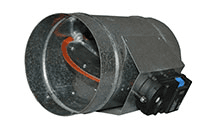 Wireless zone control systems, offering flexible installation without hardwired control connections.
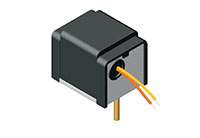 Wired zone control systems, engineered for traditional thermostat and building automation system (BAS) applications.
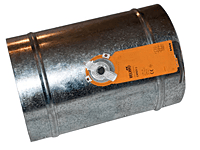 Motorized round tube/collar dampers, designed for efficient integration into round ductwork.
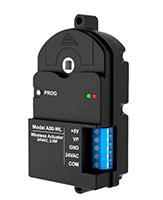 Motors, designed to match torque, duty cycle, and control requirements.
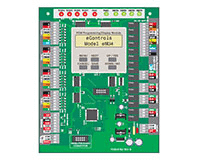 Zone control panels, providing centralized coordination of multiple dampers and zones.
For fully custom projects, Alan Manufacturing can laser-fit motor mounts directly into damper assemblies. Doing so ensures proper alignment, consistent performance, and long service life.
Contact Alan Manufacturing for Custom Motorized Dampers
Alan Manufacturing works closely with engineers, contractors, OEMs, and distributors to deliver motorized damper solutions tailored to real-world HVAC applications. From wireless zoning systems to fully integrated damper-and-actuator assemblies, each product is built to meet specific performance and installation requirements.
To discuss specifications, lead times, or customization options, contact us or request a quote.
/Asset/a1286.jpg
Manual Damper Systems and Products
Manual Dampers

For simple residential, commercial, or light industrial HVAC systems, manual dampers are cost-effective solutions that regulate airflow throughout a building. They allow for easy manual operation in areas without automated temperature control. Learn more about how manual dampers work, their benefits and applications, and the product types we offer at Alan Manufacturing.
Types of Manual Dampers from Alan Manufacturing
Alan Manufacturing designs and manufactures a wide range of manual dampers. We support both standard catalog products and fully custom configurations. In all cases, we engineer manual airflow control dampers for seamless integration into round or rectangular duct systems and related HVAC components.
Core manual damper offerings from Alan Manufacturing include:
- Manual damper tube assemblies, ideal for compact installations requiring integrated airflow controls in round duct sections.
- Round air balancing/barometric bypass volume dampers, used to bypass excess air when duct static pressure increases while the zone dampers are closed.
- Cable-controlled volume dampers, where the actuation cable can be routed around obstructions without catching or binding.
- Volume dampers, available in multiple blade styles, materials, and sizes to support precise airflow balancing.
We can also manufacture manual dampers to exact dimensional and performance specifications, meeting even high-volume requirements.
How Manual Dampers Work
A manual damper is a mechanical device that regulates airflow in HVAC ductwork by physically adjusting a blade open or closed. By adjusting a lever or dial by hand, operators can change the airflow within a space. Once set, the damper remains fixed in place until manually reset.
Benefits of Manual Dampers
Hand-operated dampers solve basic airflow control challenges without introducing needless complexity. For many projects—especially those with fixed zoning or stable operating conditions—the right manual damper delivers consistent performance and minimal lifecycle costs.
With a simpler design and fewer components, manual dampers are easier and more cost-effective to maintain than automated, motorized damper systems. This also means manual dampers are easier to access for quick repairs or adjustments, keeping the entire HVAC system in optimal operating condition.
These types of manual dampers also offer unique benefits in HVAC systems:

Adding a manual pressure relief damper creates a built-in fail-safe in the HVAC system. If a motorized damper ever fails, the manual damper helps prevent excess pressure from pushing air back into the furnace, protecting the system from potential damage and costly repairs.

Cable-operated dampers allow users to control airflow in hard-to-reach areas—such as garages, attics, or behind finished walls and ceilings—without needing direct access to the damper itself. Instead of tearing into drywall or climbing into tight spaces, adjustments can be made from a convenient, accessible location. Cable dampers also bring a level of simplicity and reliability that motorized systems can’t always match, since they don’t require wiring, controls, or actuators.
Applications of Manual Dampers
Various HVAC systems for commercial, industrial, and residential settings all rely on manual dampers. Where conditions require low-cost, reliable airflow control, hand-operated duct dampers are often ideal. That includes many of these types of applications:

Regulating airflow to specific areas without requiring electronics.

For manually equalizing airflow during initial setup to ensure proper ventilation.

Manual dampers easily shut off airflow to certain sections of ductwork during maintenance or repairs.
Adjusting the volume of outdoor air that enters an HVAC system.

Manual backup in case motorized dampers fail or the power goes out.
When to Use Motorized vs. Manual Dampers
The choice between motorized vs. manual dampers depends largely on system behavior over time. For instance, manual dampers are best suited for systems with fixed airflow requirements, while motorized dampers are more appropriate for dynamic zoning, occupancy-based control, or building automation integration.
If airflow settings rarely change, and users prefer simplicity, manual dampers are the most efficient, cost-effective solution.
Contact Alan Manufacturing for Custom Manual Dampers
For over 30 years, Alan Manufacturing has supported engineers, contractors, OEMs, and distributors with both standard and custom manual damper solutions. We can easily scale production while maintaining tight quality controls and helping partners stay fully stocked for complex projects.
For affordable HVAC dampers, contact us or request a quote to learn more about our manual dampers and custom capabilities.
Wireless Zone Control Systems
Wireless Dampers
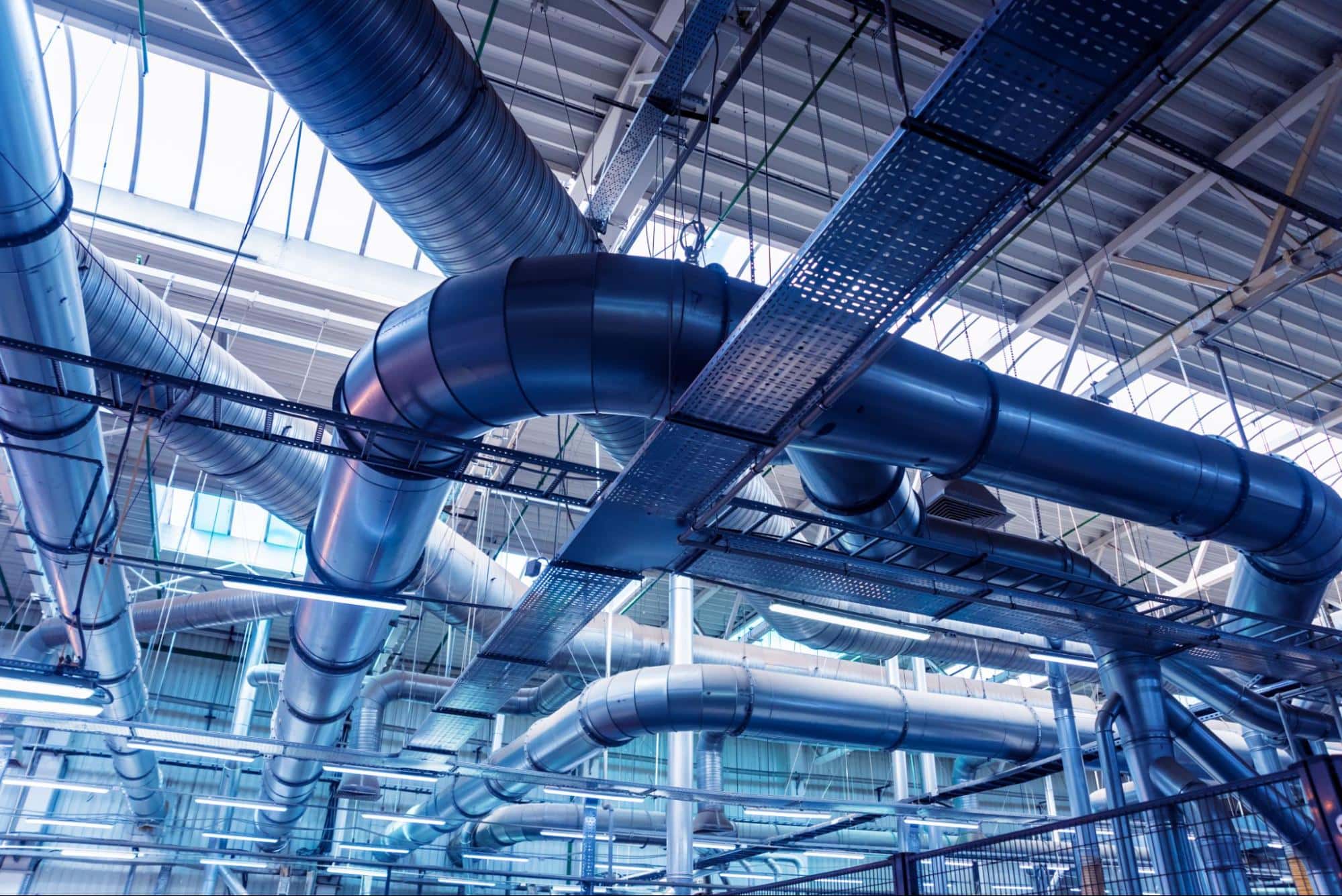
Dampers play a key role in HVAC systems, ensuring proper airflow to meet the unique challenges of large industrial and commercial buildings. Wireless dampers can open and close within ductwork via remote control, providing convenient, precise airflow management.
Alan Manufacturing supplies standard and customized wireless damper products, as well as retrofit motorized dampers with remote control capabilities. Learn more about how wireless HVAC dampers work and the features and benefits of our products.
How Wireless Damper Systems Work
An HVAC damper controls the amount of cooled or heated air that passes through the ductwork of an HVAC system. In wired damper systems, thermostats set the temperature while dampers control the amount of air that flows through the system. The dampers inside the ductwork open when the area requires heating or cooling and close when an airflow adjustment is not needed. Limiting or shutting off airflow to unused zones results in significant energy and cost savings.
A wireless damper system performs the same functions via remote control, allowing for real-time zone heating and cooling capabilities. HVAC wireless systems can quickly respond to changing airflow needs through effective communication between motorized dampers and remote controls. Wireless remote controls also eliminate the need for physical control wiring, allowing for quick and easy installation.
Well-regulated airflow makes it easier to maintain the desired climate conditions in multiple open areas, promoting a more efficient heating and cooling system. A single remote control from Alan Manufacturing can operate up to 32 wireless dampers, and it can be digitally set to adjust each wireless damper from the fully closed (0%) to fully open (100%) position in 5% increments. The remote remembers each zone’s last setting when the zone is selected.
Wireless HVAC Dampers Products
A80WLD Wireless Volume Damper Systems
- Damper slips into diffuser collar between the flex duct drop and ceiling diffuser, or in flex duct run
- A Remote controls up to 32 different AZRD-A80WL Dampers. A Wireless Thermostat controls one or more AZRD-A80WL Dampers controlling air flow to a space where the thermostat is located
WRC Model Wand Remote Controls
- The WRC can control air flow from 1024 different wireless dampers installed on ceiling diffusers or registers.
- Each damper is programmed from the WRC with a Zone number from 1 to 32 and an Address from 1 to 32. Typically, a single WRC would control up to 32 different diffusers or dampers with the same Address.
Features and Benefits of Our Wireless HVAC Dampers
Our wireless HVAC dampers enhance indoor air quality by optimizing air distribution through strategic, room-by-room airflow control. These essential HVAC components provide precise, real-time airflow monitoring to maximize occupant safety and comfort while offering the following benefits:
- Convenience and affordability
- Eliminates air leaks and hot/cold spots
- Fast, easy installation
- Improves HVAC system efficiency
- Reduces noise
- Prevents excess energy consumption
- Prolongs equipment longevity by mitigating wear and tear
- Reduces energy costs
Features

Internet connectivity, not hard-wired installation

Red/green indicator light signals when the damper is closed/open

Remote control access via wireless remote or smartphone

Retrofits are available in round, rectangular, and rectangular frame configurations
Applications of Wireless Dampers
Wireless dampers are a unique solution for large areas that require precise control of airflow to maximize occupant comfort and energy efficiency. Applications that can benefit from the use of a wireless HVAC damper system include, but are not limited to:

Banquet halls

Commercial and industrial facilities

Break rooms

Large conference rooms and training areas

Multiple offices controlled by a single thermostat

Residential smart homes
A wireless damper is ideal for managing energy usage in unoccupied areas, controlling airflow in spaces with balancing issues, and for retrofit projects where installing a wired system would prove difficult.
Custom Wireless Remote Control Dampers From Alan Manufacturing, Inc.
Since 1992, Alan Manufacturing, Inc. has been serving the HVAC industry with standard and specialized dampers, duct mufflers, and spare parts. With over 1,000 unique product designs, we can manufacture low to high volumes of standard or custom products based on your exact specifications.
With a focus on quality and customer service, we offer top-quality smart dampers that feature wireless zone control for optimal comfort and reliability in commercial and industrial HVAC applications. Our products meet industry standards set by ASTM, CE, RoHS, and UL.
Contact us to learn more about our wireless remote dampers for your HVAC system. You can also request a quote to get started on your solution.
Frequently Asked Questions (FAQs)
Are Wireless HVAC Dampers Reliable?
Yes. Our wireless HVAC dampers are constructed from durable components and designed for industrial or commercial use. Wireless dampers effectively control airflow and improve energy efficiency—an affordable solution for precise remote control operation of multiple dampers in a complex HVAC system. We also offer robust replacement components, including damper blades, brackets, saddle regulators, and regulator dials.
What Controllers Do Wireless Dampers Work With?
Most wireless dampers are designed to integrate with wireless thermostats, mesh network hubs, or centralized zone control systems.
In contrast, our wireless dampers operate using radio frequency (RF) technology, enabling direct control via RF remotes or proprietary control modules—eliminating the need for thermostats, wiring, or complex zoning systems.
